Laser engraving vs. printing: durability, look, and when each wins
Updated 2026-08-08 · Big Laser Co., Loveland, Colorado
Engraving and printing solve the same problem — getting a design onto a thing — in opposite ways. Printing adds a layer of ink to the surface; engraving removes material and makes the mark part of the object itself. Neither is universally better, but they fail and shine in very different situations, and knowing which is which will save you money and disappointment.
The fundamental difference
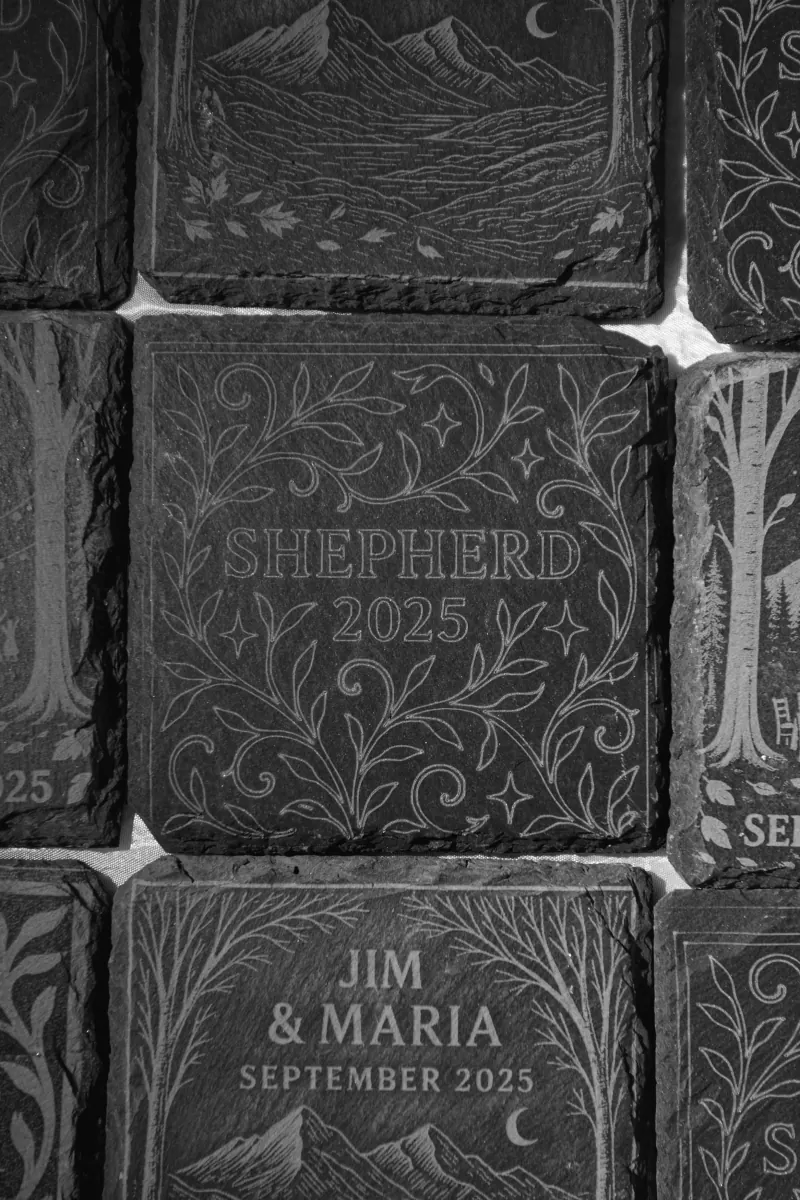
A laser engraver doesn't apply anything. The beam vaporizes a thin layer of the material, so the design is physically cut into the surface — burned into wood, etched into slate, carved into leather or acrylic. There is no ink, which means there is nothing to peel, fade, or wash off. The mark lasts as long as the object does.
Printing deposits ink or toner on top of the surface. That's not a flaw — it's exactly what makes full color, gradients, and photographic detail possible. But the image and the object remain two separate things, and the bond between them is where durability lives or dies.
Durability
An engraved mark survives whatever the material survives. Dishwasher cycles, weather, years of handling — the design can wear only if the surface itself wears away with it. A printed mark depends on the ink, the substrate, and any protective coating. On paper behind glass, that can mean decades. On a coaster that meets condensation and coffee mugs daily, or a sign that lives outdoors, surface printing is usually the first thing to go.
The look
Engraving is monochrome. There's no cheating this: the contrast comes from the material, not from ink. Slate engraves to a soft gray against its dark face, wood darkens where the beam has been, leather takes a deep burnished mark. What you give up in color you gain in texture — an engraved design has relief you can feel under a fingertip, which is a large part of why it reads as premium.
Printing gives you the full palette. If the design is a photograph, a watercolor, or brand artwork in specific colors, no amount of engraving finesse substitutes for ink.
| | Engraving | Printing | |---|---|---| | Color | Monochrome; contrast from the material | Full color, photographic | | Longevity | Permanent — can't peel, fade, or wash off | Depends on ink, substrate, coating | | Feel | Tactile, dimensional | Flat | | High volume | Costs scale with machine time | Cheaper at very high quantities |
When printing genuinely wins
Be honest with yourself about the job. Printing wins when the design needs full color or photographic reproduction; when you need very high volumes of paper goods, where presses are dramatically cheaper per piece; and when the item is short-lived by design — a flyer doesn't need to outlast the event it advertises. If someone tries to sell you engraving for a job like that, they're selling you the wrong process.
When engraving wins
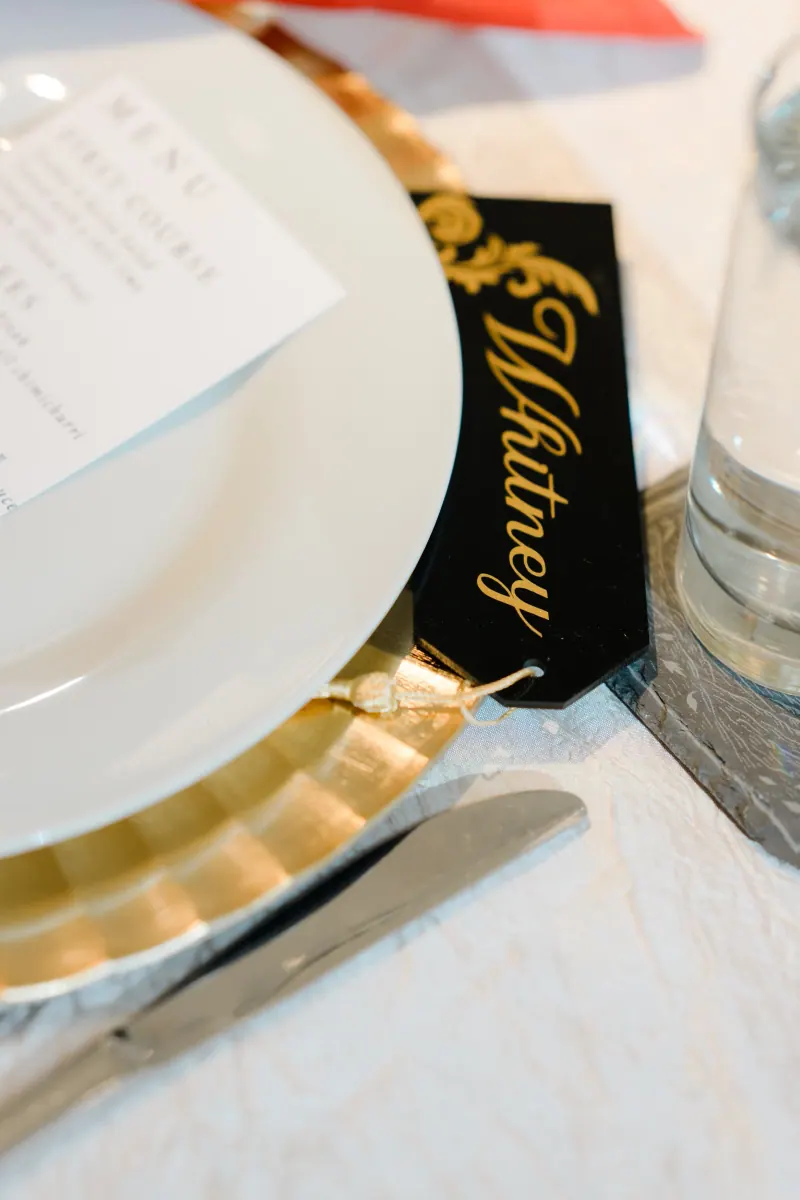
Engraving wins when the piece is meant to be kept: keepsakes, gifts, wedding pieces that get handled at the event and displayed for years after. It wins outdoors and in hard use, where surface printing fades and peels. It wins whenever texture and material matter — wood, slate, leather, and acrylic all carry an engraved mark in a way ink on their surface never quite does. And it wins on premium feel: a monochrome mark cut into real material signals permanence in a way a sticker or a print can't.
What we run
At Big Laser Co. we engrave on a Thunder Nova Plus with a 51-inch bed — enough working area for large-format pieces or full batch runs in a single setup. We work in wood and baltic birch plywood, acrylic, leather, slate, and paperboard, from our studio in Loveland, Colorado, and ship anywhere in the US. You can see finished work in the shop or bring us something unusual as a custom project.
If you're weighing the two processes for a specific project, describe the piece and how it will live, and we'll tell you plainly which one it calls for — including when the answer is a print shop, not a laser. Get in touch and we'll figure it out together.
Quick answers
Is laser engraving more durable than printing?
Yes — engraving physically removes material, so the mark can't peel, fade, or wash off the way surface printing can. The trade-off is that engraving is monochrome: it gets its contrast from the material itself rather than ink.